


 Jun 03, 2026
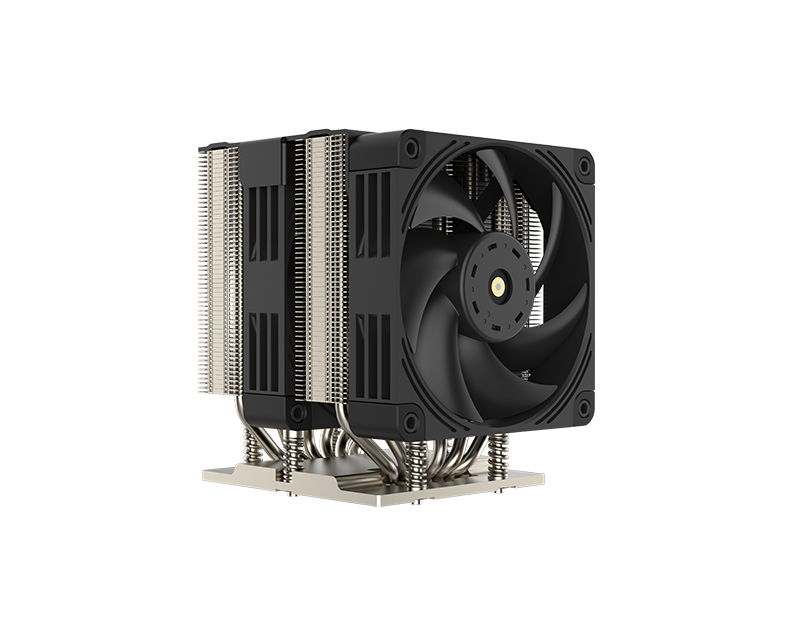
In the realm of PC hardware, the CPU (Central Processing Unit) stands as the core component responsible for executing millions of instructions per second, and its performance and longevity are directly tied to effective heat dissipation. As CPUs generate heat during operation—especially high-performance models used for gaming, video editing, 3D rendering, and server applications—maintaining optimal operating temperatures is critical. A CPU that overheats can suffer from thermal throttling, where it automatically reduces its clock speed to cool down, resulting in decreased performance. In extreme cases, prolonged overheating can cause permanent damage to the CPU, leading to system failure. Among the key components of a CPU cooling system, the PWM (Pulse Width Modulation) fan plays a pivotal role, and its automatic speed control function has become a standard feature in modern PC builds, balancing cooling efficiency, noise reduction, and energy conservation.
To understand CPU cooler PWM fan automatic speed control, it is first essential to grasp the basics of PWM technology and how it differs from traditional fan control methods. In the early days of PC cooling, CPU fans typically used voltage-based speed control. This method worked by adjusting the voltage supplied to the fan motor—lower voltage reduced fan speed, while higher voltage increased it. However, voltage-based control had significant limitations: it was imprecise, inefficient, and often resulted in inconsistent fan performance. For example, at low voltages, the fan might struggle to start or operate smoothly, leading to inadequate cooling or annoying fan noise. Additionally, voltage control wasted energy because the fan motor was constantly throttled, reducing its efficiency and lifespan.
PWM technology revolutionized CPU fan control by addressing these shortcomings. PWM is a method of regulating the power supplied to an electrical device by switching the power on and off at a rapid rate. Instead of varying the voltage, PWM uses a series of electrical pulses with a fixed frequency, and the "duty cycle"—the percentage of time the power is on during each cycle—determines the fan speed. For instance, a 100% duty cycle means the fan receives constant power and runs at full speed, while a 50% duty cycle means the power is on for half of each cycle, resulting in the fan running at approximately half its maximum speed. The key advantage of PWM is that it allows for precise, efficient control of fan speed without the drawbacks of voltage-based control. The fan motor receives full voltage during the "on" periods, ensuring smooth operation even at low speeds, and the rapid switching is imperceptible to the human ear, eliminating the noise associated with voltage throttling.
The automatic speed control function of a PWM fan is enabled by a closed-loop system that integrates temperature sensors, a controller (usually part of the motherboard or a dedicated fan controller), and the PWM fan itself. Modern CPUs are equipped with built-in thermal sensors (thermistors) that constantly monitor the core temperature. These sensors send real-time temperature data to the motherboard’s chipset or a dedicated fan controller, which then adjusts the duty cycle of the PWM signal sent to the fan based on predefined parameters. This creates a self-regulating system where the fan speed automatically increases or decreases in response to changes in CPU temperature, ensuring optimal cooling at all times.
The working principle of PWM fan automatic speed control can be broken down into a simple cycle: when the CPU is idle or under light load, it generates minimal heat, and the temperature sensors detect a low core temperature (typically between 30°C and 40°C for most CPUs). In response, the controller sends a PWM signal with a low duty cycle (often between 20% and 40%), causing the fan to run at a slow speed. This low speed is sufficient to dissipate the small amount of heat generated, while keeping fan noise to a minimum—often so quiet that it is indistinguishable from the background noise of the PC. As the CPU load increases (e.g., when running a demanding game or a CPU-intensive application), the core temperature rises. The sensors detect this increase, and the controller increases the duty cycle of the PWM signal, causing the fan to speed up. This increased speed moves more air across the CPU cooler’s heatsink, enhancing heat dissipation and preventing the CPU from overheating. When the CPU load decreases and the temperature drops, the controller reduces the duty cycle, and the fan slows down again, returning to a quiet operation.
One of the most significant benefits of PWM fan automatic speed control is its ability to balance cooling performance and noise levels. Unlike fixed-speed fans, which run at full speed at all times (generating unnecessary noise when the CPU is idle) or at a fixed low speed (failing to provide adequate cooling under heavy load), PWM fans adapt to the CPU’s actual cooling needs. This not only improves the user experience by reducing noise during everyday use but also ensures that the CPU remains within its safe operating temperature range even under the most demanding conditions. For example, a gamer might experience near-silent operation when browsing the web or watching videos, but when launching a graphically intensive game that pushes the CPU to its limits, the PWM fan will automatically speed up to keep the CPU cool, ensuring smooth gameplay without thermal throttling.
Another key advantage of PWM fan automatic speed control is energy efficiency. By adjusting the fan speed based on temperature, PWM fans consume less power than fixed-speed fans. When the CPU is idle, the fan runs at a low speed, drawing minimal power from the PC’s power supply. This not only reduces the overall power consumption of the PC but also extends the lifespan of the fan motor, as it is not subjected to constant high-speed operation. Additionally, the precise control offered by PWM technology reduces wear and tear on the fan bearings, further increasing the fan’s durability and reliability.
Modern PWM fans also come with advanced features that enhance their performance and usability. Many PWM fans use high-quality bearings, such as rifle bearings or fluid dynamic bearings, which reduce friction and noise while increasing lifespan. Some fans also feature anti-vibration pads or rubber mounts, which minimize the transfer of fan vibrations to the PC case, further reducing noise. Additionally, most motherboards allow users to customize the PWM fan curve through the BIOS (Basic Input/Output System) or dedicated software. A fan curve is a graph that maps CPU temperature to fan speed, allowing users to adjust the fan’s response to temperature changes. For example, a user might set the fan to start speeding up more gradually at lower temperatures for quieter operation, or to speed up more quickly at higher temperatures for maximum cooling performance. This customization ensures that the PWM fan can be tailored to the user’s specific needs, whether they prioritize silence, performance, or a balance of both.
The importance of PWM fan automatic speed control becomes even more pronounced in high-performance PC builds, such as gaming rigs, workstations, and servers. High-end CPUs, such as Intel’s Core i9 or AMD’s Ryzen 9 series, generate significant amounts of heat when under load, and a reliable cooling system with automatic speed control is essential to maintain their performance. For example, when overclocking a CPU (increasing its clock speed beyond the manufacturer’s specifications), the heat output increases dramatically, and a PWM fan with automatic speed control can adjust to the higher temperature, preventing thermal throttling and ensuring the overclocked CPU runs stably. In server environments, where CPUs run 24/7 under heavy load, PWM fans with automatic speed control help maintain consistent temperatures, reducing the risk of system downtime and extending the lifespan of the hardware.
It is also important to note that PWM fan automatic speed control is not limited to air coolers; it is also widely used in liquid cooling systems. In all-in-one (AIO) liquid coolers, the radiator fans are typically PWM-controlled, and some models also feature PWM-controlled pumps, which adjust their speed based on CPU temperature. This integration of PWM control for both fans and pumps ensures that the entire liquid cooling system operates efficiently, balancing cooling performance, noise, and energy consumption.
When selecting a CPU cooler with PWM fan automatic speed control, there are several factors to consider. First, the fan’s maximum speed and airflow rating determine its cooling capacity—higher airflow means better heat dissipation, which is essential for high-performance CPUs. Second, the fan’s noise level at different speeds is important, especially for users who prioritize a quiet PC. Third, the quality of the fan’s bearings and construction affects its durability and reliability. Finally, compatibility with the motherboard’s PWM header is essential, as most modern motherboards feature 4-pin PWM headers (compared to 3-pin voltage-controlled headers) to support automatic speed control.
In conclusion, CPU cooler PWM fan automatic speed control is a critical technology that has transformed PC cooling. By leveraging PWM technology and a closed-loop temperature monitoring system, PWM fans automatically adjust their speed to meet the CPU’s cooling needs, balancing performance, noise, and energy efficiency. Whether for everyday use, gaming, or professional applications, a CPU cooler with PWM fan automatic speed control ensures that the CPU remains within its safe operating temperature range, enhancing performance, extending hardware lifespan, and improving the overall user experience. As PC hardware continues to advance and CPUs become more powerful, the importance of PWM fan automatic speed control will only grow, making it an essential feature for any modern PC build.
If you have any suggestions and comments on our products and services, please fill in the following table

No. 18, Liguang New Industrial Zone Liguang Community, Guanlan Sub-district Longhua District, Shenzhen
Copyright 2026 © Shenzhen Yuchuang Industry Co., Ltd. 粤ICP备16089648号




 Chinese
 CN
CN Home >