


 Apr 07, 2026
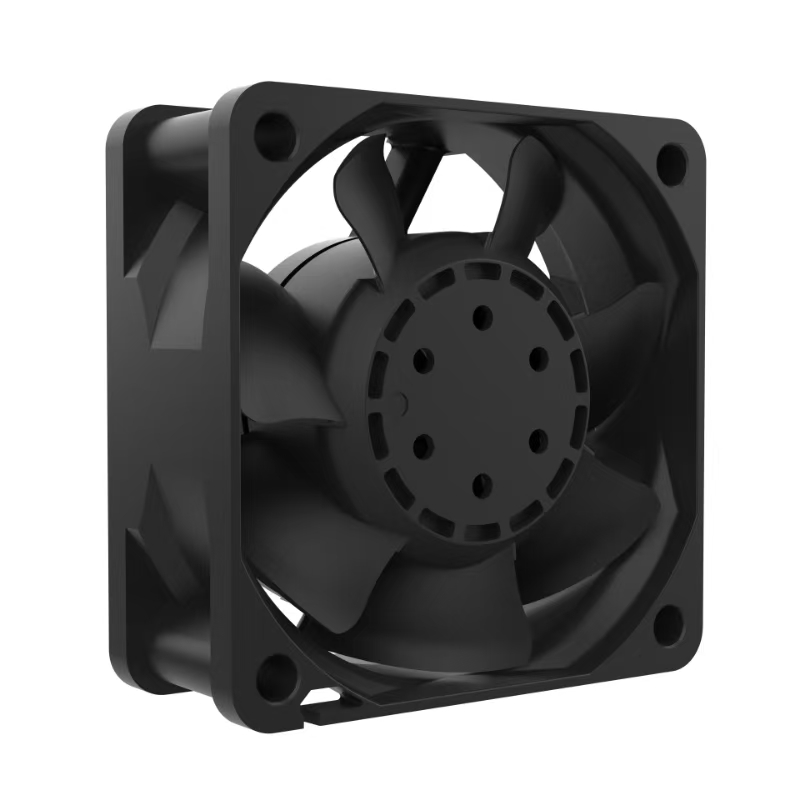
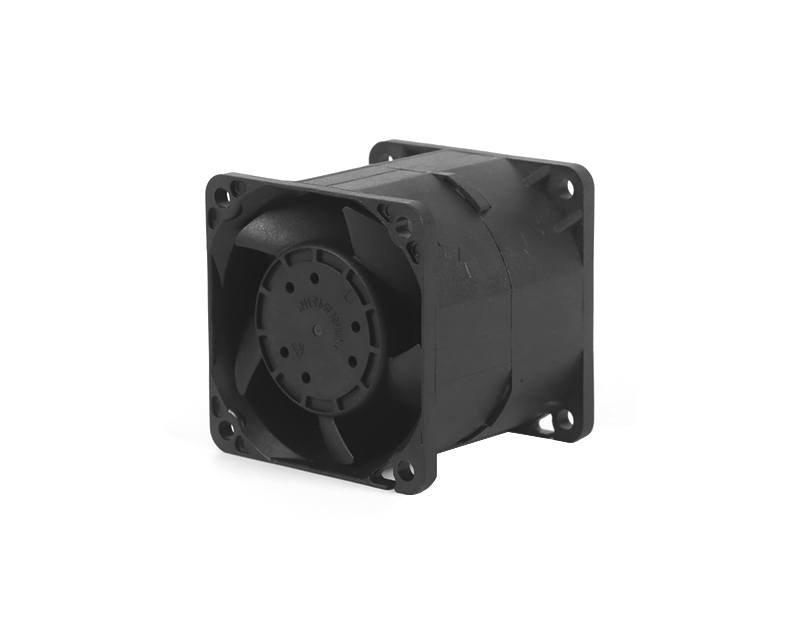
In the field of electronic equipment and industrial systems, the heat generation of equipment varies with the working load and environmental temperature. If the fan runs at a fixed speed for a long time, it will not only waste energy when the equipment heat generation is small but also fail to provide sufficient cooling capacity when the equipment heat generation is large. The DC Axial Fan with Temperature Control Function solves this problem by integrating a temperature sensor and an intelligent control circuit, which can automatically adjust the fan speed according to the ambient temperature or the temperature of the equipment, realizing intelligent heat dissipation. This fan has the characteristics of energy saving, low noise, long service life, and high reliability, and is widely used in electronic equipment, industrial control, medical equipment, automotive electronics, and other scenarios. Next, we will detailedly introduce the working principle, core components, performance parameters, application scenarios, advantages, selection methods, and development trends of this fan.
First, it is necessary to understand the working principle of the DC Axial Fan with Temperature Control Function. The core of this fan is the combination of a temperature sensor, an intelligent control circuit, and a DC axial fan. The temperature sensor is installed on the fan or the surface of the equipment that needs heat dissipation, which is used to detect the real-time temperature. The temperature sensor converts the detected temperature into an electrical signal and transmits it to the intelligent control circuit. The intelligent control circuit processes the electrical signal, compares it with the preset temperature threshold, and then outputs a control signal to adjust the speed of the fan. When the detected temperature is lower than the preset low threshold, the fan runs at a low speed (or even stops running), which saves energy and reduces noise; when the detected temperature is between the low threshold and the high threshold, the fan speed increases with the increase of temperature, ensuring that the temperature of the equipment is kept within a reasonable range; when the detected temperature is higher than the preset high threshold, the fan runs at the maximum speed, providing sufficient cooling capacity to prevent the equipment from overheating. This intelligent adjustment mechanism not only ensures the heat dissipation effect but also achieves energy saving and noise reduction.
The core components of the DC Axial Fan with Temperature Control Function include the temperature sensor, intelligent control circuit, DC brushless motor, and fan blade. The temperature sensor is the key component to detect temperature, and common types include NTC thermistor, PTC thermistor, and thermocouple. NTC thermistor is the most commonly used temperature sensor in temperature control fans, which has the characteristics of high sensitivity, low cost, and small size. Its resistance decreases with the increase of temperature, which can quickly and accurately detect the temperature change. The intelligent control circuit is the "brain" of the fan, which is composed of a microcontroller (MCU), operational amplifier, and PWM generator. The microcontroller processes the signal from the temperature sensor, judges the temperature range, and generates a PWM control signal to adjust the fan speed. The PWM control signal can change the duty cycle to adjust the average voltage of the motor, thereby changing the motor speed. The DC brushless motor is the power source of the fan, which has the advantages of low power consumption, high efficiency, and long service life. The fan blade is designed with an optimized structure to ensure high air flow efficiency and low noise. In addition, the fan is usually equipped with a speed feedback function, which can feed back the actual speed of the fan to the control circuit, forming a closed-loop control, ensuring the stability of the fan speed.
In terms of performance parameters, the DC Axial Fan with Temperature Control Function has a variety of specifications to meet different application needs. The voltage range is usually 12V, 24V, 48V, etc., which can be selected according to the power supply of the equipment. The air volume ranges from 50CFM to 500CFM, and the air pressure ranges from 0.1inH2O to 2inH2O. The temperature detection range of the fan is usually -10℃ to 100℃, which can cover most application scenarios. The preset temperature threshold can be adjusted according to the needs of the equipment, usually, the low threshold is 25-35℃, and the high threshold is 50-70℃. The speed adjustment range is usually 30%-100% of the maximum speed, which can be adjusted continuously according to the temperature. The power consumption of the fan varies with the speed, and the power consumption at low speed is much lower than that at high speed, which can save a lot of energy. The noise of the fan also varies with the speed, and the noise at low speed is very low (usually 20-30dB), which can improve the working environment. The service life of the fan is usually 50,000-80,000 hours, which is relatively long.
The application scenarios of the DC Axial Fan with Temperature Control Function are very extensive, covering various fields of electronic equipment and industrial systems. One of the most common application scenarios is electronic equipment, such as computers, servers, and routers. These equipment generate different amounts of heat when working at different loads. The temperature control fan can adjust the speed according to the load, ensuring that the equipment is cooled effectively while saving energy. For example, when the computer is in standby or light load, the fan runs at a low speed, which is quiet and energy-saving; when the computer is playing games or running large software (heavy load), the fan speed increases to provide sufficient cooling. Another important application scenario is industrial control equipment, such as PLC, frequency converters, and industrial computers. These equipment work in different environmental temperatures and loads, and the temperature control fan can automatically adjust the speed according to the ambient temperature and equipment temperature, ensuring the stable operation of the equipment. In addition, this fan is also widely used in medical equipment (such as medical monitors, laboratory equipment), automotive electronics (such as on-board inverters, battery management systems), solar power systems, and home appliances (such as refrigerators, air conditioners).
Compared with ordinary fixed-speed DC axial fans, the DC Axial Fan with Temperature Control Function has obvious advantages. First, energy saving. The fan speed is adjusted according to the temperature, and it runs at a low speed when the heat generation is small, which can save a lot of energy. For example, in server systems, the temperature control fan can save 30%-50% of energy compared with fixed-speed fans. Second, low noise. The fan runs at a low speed when the temperature is low, and the noise is very low, which improves the working environment and user experience. Third, long service life. The fan does not need to run at the maximum speed for a long time, which reduces the wear of the motor and bearing, and extends the service life of the fan. Fourth, intelligent and automatic. The fan can automatically adjust the speed according to the temperature, without manual intervention, which improves the convenience of use and the reliability of the equipment. Fifth, precise temperature control. The fan can adjust the speed in real time according to the temperature change, ensuring that the equipment temperature is kept within a reasonable range, avoiding overheating or excessive cooling, and improving the performance and service life of the equipment.
When selecting a DC Axial Fan with Temperature Control Function, several key factors need to be considered to ensure that it matches the equipment's needs. First, the temperature detection range. The temperature detection range of the fan should cover the working temperature range of the equipment to ensure that the fan can detect the temperature change of the equipment in time. Second, the temperature threshold adjustability. Some fans allow users to adjust the preset temperature threshold according to their needs, which is more flexible and suitable for different equipment. Third, air volume and air pressure. The air volume and air pressure of the fan should match the heat generation of the equipment to ensure that the fan can provide sufficient cooling capacity when running at maximum speed. Fourth, voltage and power consumption. The voltage of the fan should be consistent with the power supply of the equipment, and the power consumption should be as low as possible to save energy. Fifth, noise. The noise of the fan should be controlled within a reasonable range, especially for equipment used in indoor environments. Sixth, service life and reliability. The service life of the fan should be consistent with the service life of the equipment, and the brand and quality of the fan should be considered to ensure its reliability.
With the continuous development of intelligent technology and energy-saving requirements, the DC Axial Fan with Temperature Control Function will have broader development prospects. In the future, the development trend of this fan will focus on several aspects: first, higher intelligence. The fan will be equipped with more advanced temperature sensors and control circuits, which can realize more precise temperature control and even connect to the Internet of Things (IoT) to realize remote monitoring and control. Second, higher energy efficiency. Through the optimization of motor technology, fan blade design, and control algorithm, the energy efficiency of the fan will be further improved, saving more energy. Third, better compatibility. The fan will have more specifications and models, which can be matched with different types of equipment, and the installation and connection methods will be more flexible. Fourth, multi-functional integration. The fan will integrate multiple functions such as temperature control, speed feedback, fault alarm, and dustproof, which can meet more complex application needs. In addition, with the popularization of energy-saving and environmental protection concepts, the demand for temperature control fans will continue to grow, and they will be widely used in more fields. Therefore, the DC Axial Fan with Temperature Control Function is an important development direction of cooling fans in the future.
If you have any suggestions and comments on our products and services, please fill in the following table

No. 18, Liguang New Industrial Zone Liguang Community, Guanlan Sub-district Longhua District, Shenzhen
Copyright 2026 © Shenzhen Yuchuang Industry Co., Ltd. 粤ICP备16089648号




 Chinese
 CN
CN Home >