


 May 21, 2026
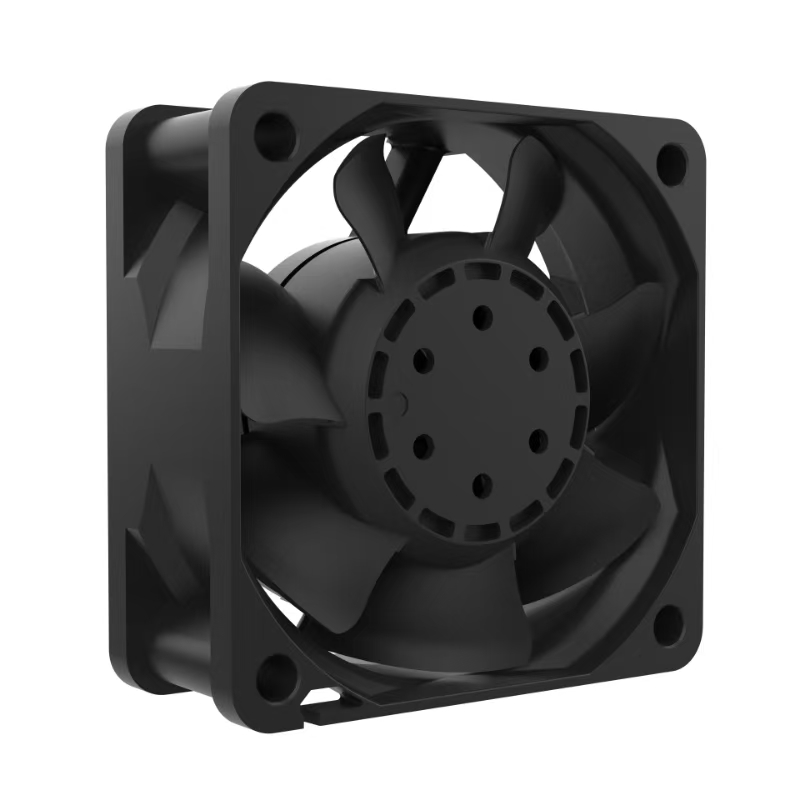
In the field of industrial ventilation, HVAC systems, and large-scale air circulation applications, the demand for high air volume combined with precise speed control has become increasingly prominent. Electronically Commutated (EC) fans equipped with Pulse Width Modulation (PWM) control technology have emerged as the optimal solution, addressing the core challenges of traditional fans—such as inefficient speed regulation, high energy consumption, and unstable air volume output. Unlike conventional AC fans that rely on mechanical speed control methods (e.g., voltage regulation or frequency conversion with additional inverters), EC fans integrate a brushless DC motor with built-in electronic controls, enabling seamless PWM control and delivering high air volume performance that meets the rigorous requirements of modern industrial and commercial environments.
To understand the synergy between PWM control and high air volume in EC fans, it is first essential to grasp the fundamental working principle of EC fan technology. EC fans, short for Electronically Commutated fans, utilize a permanent magnet synchronous motor (PMSM) paired with an integrated electronic controller, eliminating the need for mechanical commutators (such as brushes and gearboxes) that are common in traditional AC motors. This electronic换向 (commutation) process is achieved by the controller real-time detecting the rotor position through Hall sensors, then dynamically adjusting the direction of the stator magnetic field via intelligent algorithms to drive the rotor rotation without contact. This design not only enhances the motor’s efficiency but also lays the foundation for precise speed control—critical for maintaining stable high air volume output under varying load conditions.
PWM control, a digital control technique widely used in electronic devices, operates by generating a series of square-wave pulses with varying duty cycles to regulate the speed of the EC fan. The duty cycle refers to the percentage of time the signal is in the high state (on) within a single pulse period. For example, a 100% duty cycle means the fan operates at full speed, delivering maximum air volume, while a 50% duty cycle reduces the speed to half, resulting in half the air volume (in a linear relationship for most EC fans). This precise control mechanism allows the fan to adjust its speed—and thus its air volume—with exceptional accuracy, responding to changes in system demand in real time (response time < 0.1 seconds), which is far superior to the slow response of traditional AC fans with mechanical speed control.
The ability of PWM-controlled EC fans to deliver high air volume is rooted in both their motor design and aerodynamic optimization. EC motors boast an efficiency of over 90%, significantly higher than the 50-70% efficiency of traditional AC motors. This high efficiency means that more electrical energy is converted into mechanical energy to drive the fan blades, rather than being wasted as heat. Additionally, manufacturers optimize the fan blades using advanced computational fluid dynamics (CFD) technology, refining the blade curvature, angle, and area to minimize air resistance and maximize airflow. For instance, some high-air-volume EC fans feature backward-curved blades with optimized profiles, which not only increase air pressure but also enhance airflow rate, enabling air volume outputs of up to 84,300 m³/h for large-scale models—sufficient to meet the ventilation needs of large industrial warehouses, data centers, and exhibition halls.
One of the most significant advantages of PWM-controlled high-air-volume EC fans is their energy efficiency, especially in applications where air volume needs to be adjusted dynamically. In traditional AC fans, even if the required air volume is reduced, the motor still operates at a fixed speed (unless an expensive inverter is added), leading to unnecessary energy waste. In contrast, PWM control allows the EC fan to adjust its speed proportionally to the required air volume, ensuring that the motor consumes only the energy needed to maintain the desired airflow. A case study in a Singapore data center demonstrated that replacing 18 aging AC supply fans with PWM-controlled EC fans resulted in a 41% drop in fan energy consumption, with no need for additional inverters or electrical panel rewiring. This energy efficiency not only reduces operational costs but also aligns with global sustainability goals and increasingly stringent energy regulations.
Another key benefit of PWM-controlled EC fans in high-air-volume applications is their stability and reliability. The electronic control system continuously monitors the fan’s operation, including speed, current, and temperature, and automatically adjusts the PWM signal to maintain stable air volume output. This is particularly critical in environments where consistent airflow is essential, such as cleanrooms, pharmaceutical factories, and data centers. For example, in a cleanroom requiring ISO standard laminar airflow, PWM-controlled EC fans can maintain a constant high air volume with minimal fluctuations, ensuring that airborne particles are effectively filtered and the cleanroom environment is preserved. Additionally, the brushless design of EC motors eliminates the wear and tear associated with brushes, resulting in a longer service life (up to 100,000 operating hours) and lower maintenance costs compared to traditional AC fans.
PWM-controlled high-air-volume EC fans also offer exceptional versatility, adapting to a wide range of applications. In industrial manufacturing, they are used for烟气排放, workshop ventilation, and cooling of large machinery, where high air volume is needed to remove heat and pollutants. In commercial buildings, such as shopping malls and airports, they provide efficient ventilation to maintain indoor air quality while reducing energy consumption. In data centers, they adjust airflow based on server load, ensuring that cooling is delivered precisely where it is needed, avoiding overcooling and energy waste. Furthermore, PWM control allows for easy integration with building management systems (BMS) and other smart control devices, enabling centralized monitoring and control of multiple fans—ideal for large-scale installations.
When selecting a PWM-controlled high-air-volume EC fan, several key factors should be considered to ensure optimal performance. First, the air volume and static pressure requirements of the application must be matched to the fan’s specifications—manufacturers typically provide performance curves that show the relationship between air volume, static pressure, and power consumption. Second, the PWM control range (usually 0-100% duty cycle) should be compatible with the system’s control signals, ensuring seamless integration. Third, the fan’s construction materials should be suitable for the application environment—for example, corrosion-resistant materials for harsh industrial environments or dust-proof designs for cleanrooms. Finally, compliance with international standards and certifications (such as CE, UL, and RoHS) ensures the fan’s safety and reliability.
In conclusion, PWM-controlled high-air-volume EC fans represent a significant advancement in ventilation technology, combining precise speed control, high energy efficiency, and stable performance. Their ability to deliver large air volumes while adapting to dynamic demand makes them indispensable in modern industrial, commercial, and institutional applications. As global demand for energy efficiency and sustainability continues to grow, PWM-controlled EC fans are poised to replace traditional AC fans as the preferred choice for high-air-volume ventilation needs, offering long-term cost savings, improved performance, and a reduced environmental footprint.
If you have any suggestions and comments on our products and services, please fill in the following table

No. 18, Liguang New Industrial Zone Liguang Community, Guanlan Sub-district Longhua District, Shenzhen
Copyright 2026 © Shenzhen Yuchuang Industry Co., Ltd. 粤ICP备16089648号




 Chinese
 CN
CN Home >