


 Apr 02, 2026
In the era of big data, cloud computing, and artificial intelligence, servers have become the core infrastructure of various enterprises and institutions, undertaking important tasks such as data storage, data processing, and network services. Servers need to work continuously 24 hours a day, and the internal CPU, GPU, memory, hard disk, and other high-performance components will generate a huge amount of heat during operation. If the heat cannot be dissipated in time, the temperature of the server will rise rapidly, which will lead to reduced server performance, unstable operation, shortened component service life, and even server crash, resulting in serious data loss and economic losses. Therefore, efficient heat dissipation is crucial for the stable operation of servers. The High Air Volume DC Axial Fan for Server Chassis is specially designed to solve the heat dissipation problem of server chassis, providing large air volume, high air pressure, high efficiency, and stable cooling performance. This fan is the core component of the server heat dissipation system, which can quickly take away the heat generated by the internal components of the server, ensuring the stable and efficient operation of the server. Next, we will detailedly introduce the product characteristics, core parameters, structural design, working principle, application scenarios, advantages, and development trends of this fan.
First, it is necessary to clarify the core positioning of the High Air Volume DC Axial Fan for Server Chassis. As the name suggests, this is a DC axial flow fan with high air volume, which is mainly used in server chassis to provide forced ventilation and heat dissipation. Compared with ordinary DC axial fans, the most prominent feature of this fan is its high air volume and high air pressure. The air volume is usually above 100CFM, and some high-power models can reach 500CFM or more, which can generate a strong air flow to quickly take away the heat inside the server chassis. The high air pressure ensures that the air flow can pass through the dense heat sinks and component gaps inside the server, avoiding the formation of heat dead zones and ensuring uniform heat dissipation of the entire chassis. In addition, the fan adopts DC power supply, which has the advantages of low power consumption, high energy efficiency, stable speed regulation, and low noise compared with AC fans, which is very suitable for the long-term continuous operation of servers.
In terms of core parameters, the High Air Volume DC Axial Fan for Server Chassis is designed around the heat dissipation needs of servers. The voltage range is usually 12V, 24V, or 48V, which is consistent with the power supply system of the server. 12V and 24V fans are mainly used in small and medium-sized servers, while 48V fans are mainly used in large-scale server clusters and high-performance servers, which have higher energy efficiency and stability. The air volume of the fan is the core parameter, which is usually between 100CFM and 500CFM, and the specific air volume is selected according to the size of the server chassis and the heat generation of the internal components. The air pressure of the fan is between 0.5inH2O and 3inH2O, which can ensure that the air flow can overcome the resistance of the heat sinks and component gaps and reach all parts of the chassis. The speed of the fan is usually between 2000RPM and 8000RPM, and the speed can be adjusted through PWM speed regulation, which can adjust the air volume according to the temperature of the server, realizing intelligent heat dissipation and energy saving. The power consumption of the fan is between 5W and 20W, which is relatively low compared with the total power consumption of the server, and will not significantly increase the energy consumption of the server. In terms of noise, although the fan has high air volume and high speed, through the optimized design of the fan blade (such as airfoil blade design, balanced dynamic design) and the use of high-precision ball bearings, the noise is controlled between 35dB and 65dB, which is within the acceptable range of the server room.
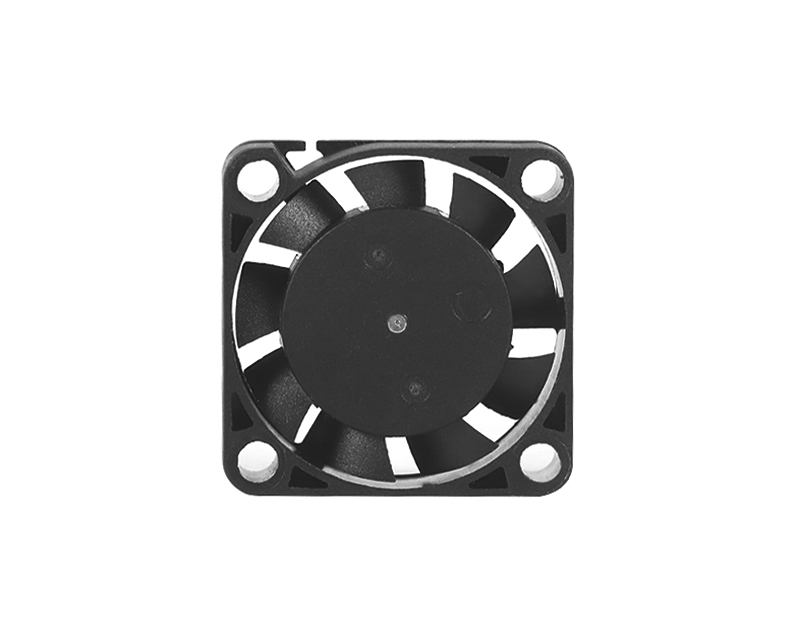
The structural design of the High Air Volume DC Axial Fan for Server Chassis focuses on high air volume, high air pressure, and stability. The fan casing is usually made of high-quality metal materials (such as aluminum alloy) or engineering plastics (such as PBT) with high strength, which has good heat resistance and mechanical strength, and can withstand the high-temperature environment inside the server chassis. The casing is designed with a large air inlet and outlet area to ensure the smooth flow of air and improve the air volume. The fan blade is the key component to generate high air volume and high air pressure, which is usually made of high-strength engineering plastics or aluminum alloy, and adopts an airfoil design. The airfoil blade can reduce air resistance, improve air flow efficiency, and generate larger air volume and air pressure. The number of fan blades is usually 5-9 pieces, which is optimized according to the size of the fan and the air volume requirement. The motor of the fan is a high-power DC brushless motor, which has the advantages of high efficiency, long service life, and stable operation. The motor is equipped with a high-precision ball bearing, which can reduce friction and wear, ensure the stable operation of the fan for a long time, and the service life is usually more than 60,000 hours. In addition, the fan is usually equipped with a speed feedback function (such as tachometer output), which can feed back the operating speed of the fan to the server's control system, allowing the server to monitor the fan's operating status in real time and take timely measures in case of failure.
The working principle of the High Air Volume DC Axial Fan for Server Chassis is relatively simple. When the fan is powered on, the DC brushless motor drives the fan blade to rotate at high speed. The rotating fan blade pushes the air to flow parallel to the fan axis, forming a strong air flow. The air flow enters the server chassis from the air inlet of the chassis, passes through the heat sinks of the CPU, GPU, and other components, takes away the heat generated by the components, and then is discharged from the air outlet of the chassis, forming a complete ventilation and heat dissipation cycle. The high air volume and high air pressure of the fan ensure that the air flow can quickly pass through the entire chassis, avoiding the accumulation of heat and ensuring that the temperature of each component is kept within the safe range. In addition, the fan's speed can be adjusted according to the temperature of the server. When the server is in light load and the heat generation is small, the fan runs at a low speed, which saves energy and reduces noise; when the server is in heavy load and the heat generation is large, the fan runs at a high speed, providing sufficient cooling capacity.
The application scenarios of the High Air Volume DC Axial Fan for Server Chassis are mainly concentrated in various types of servers and server-related equipment. One of the most common application scenarios is rack-mounted servers. Rack-mounted servers are widely used in data centers, and multiple servers are installed in a rack. The internal space of the rack is narrow, and the heat generation is large. The high air volume DC axial fan is installed at the front, rear, or top of the rack to form forced ventilation, taking away the heat generated by all servers in the rack. Another important application scenario is blade servers. Blade servers are highly integrated, with multiple blade modules installed in a single chassis, and the heat density is very high. The high air volume fan is installed in the chassis to provide targeted cooling for each blade module, ensuring the stable operation of the blade server. In addition, this fan is also used in tower servers, high-performance computing (HPC) servers, storage servers, and other server types, as well as server cabinets and data center air conditioning systems.
Compared with other server cooling solutions (such as heat pipes, liquid cooling), the High Air Volume DC Axial Fan has obvious advantages. First, it has high heat dissipation efficiency. The fan adopts forced ventilation, which can quickly take away a large amount of heat, and the heat dissipation effect is stable and reliable, which is suitable for the high heat generation of servers. Second, it has low cost. Compared with liquid cooling systems, the cost of the high air volume DC axial fan is much lower, which can reduce the overall cost of the server and data center. Third, it is easy to install and maintain. The fan has a simple structure, can be quickly installed in the server chassis, and the maintenance is relatively simple. It only needs to be cleaned and inspected regularly to ensure its normal operation. Fourth, it has good compatibility. The fan has a variety of specifications and models, which can be matched with different types and sizes of server chassis, and can be directly integrated into the server's heat dissipation system. In addition, the fan has low power consumption and energy saving, which is in line with the energy-saving requirements of data centers. With the increasing scale of data centers, energy saving has become an important issue, and the high-efficiency and low-power characteristics of the fan can help data centers reduce energy consumption.
In terms of maintenance, the High Air Volume DC Axial Fan for Server Chassis needs regular inspection and cleaning to ensure its stable operation. First, it is necessary to regularly clean the surface of the fan, the air inlet, and the air outlet to avoid dust accumulation affecting the air volume and heat dissipation effect. The server chassis will accumulate a lot of dust during long-term operation, which will block the fan's air inlet and outlet, reduce the air flow, and even cause the fan to overheat and fail. Therefore, it is recommended to clean the fan every 3-6 months. Second, it is necessary to check the fan's operating status regularly, such as whether there is abnormal noise, vibration, or speed reduction. If any abnormal situation is found, the fan should be stopped for inspection and replaced in time to avoid affecting the heat dissipation of the server. Third, it is necessary to check the fan's power connection and speed feedback line regularly to ensure that the connection is tight and there is no looseness or poor contact. In addition, for data centers with a large number of servers, it is recommended to establish a fan operation monitoring system to monitor the operating status of each fan in real time, so as to find and solve problems in time.
With the rapid development of big data, cloud computing, and artificial intelligence, the performance of servers is constantly improving, and the heat generation is also increasing. This puts higher requirements on the heat dissipation capacity of the High Air Volume DC Axial Fan for Server Chassis. In the future, the development trend of this fan will focus on several aspects: first, higher air volume and air pressure. With the increase of server heat density, the fan needs to provide larger air volume and air pressure to meet the heat dissipation needs. Second, higher energy efficiency. Through the optimization of motor technology, fan blade design, and control system, the energy efficiency of the fan will be further improved, helping data centers save more energy. Third, intelligence. The fan will be equipped with more intelligent functions, such as temperature sensing, speed automatic adjustment, fault alarm, etc., which can realize more precise heat dissipation control and improve the stability and reliability of the fan. Fourth, lower noise. Through the use of more advanced bearing technology and fan blade optimization, the noise of the fan will be further reduced, improving the working environment of the data center. In addition, with the development of liquid cooling technology, the combination of high air volume DC axial fans and liquid cooling systems will become a new trend, providing more efficient heat dissipation solutions for high-performance servers. Therefore, the High Air Volume DC Axial Fan for Server Chassis has broad market prospects and will continue to play an important role in the server heat dissipation field.
If you have any suggestions and comments on our products and services, please fill in the following table

No. 18, Liguang New Industrial Zone Liguang Community, Guanlan Sub-district Longhua District, Shenzhen
Copyright 2026 © Shenzhen Yuchuang Industry Co., Ltd. 粤ICP备16089648号




 Chinese
 CN
CN Home >