


 Mar 25, 2026
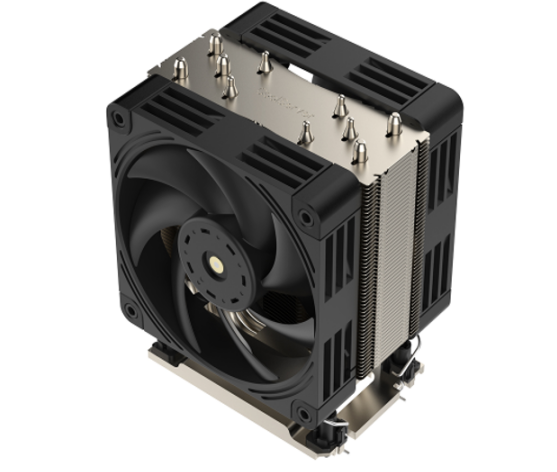
The Silent CPU Cooler is a specialized thermal management solution tailored for users who prioritize a quiet computing experience without compromising on cooling performance. Whether you’re building a home office PC, a media center, or a gaming rig that you want to run discreetly, a silent CPU cooler addresses the common pain point of excessive fan noise associated with standard cooling systems, while still ensuring that your CPU operates within safe temperature ranges. Designed with noise reduction as a core principle, these coolers incorporate a range of engineering innovations and high-quality components to minimize acoustic output, making them ideal for environments where noise levels need to be kept to a minimum, such as bedrooms, home theaters, or quiet workspaces.
The key to the silent operation of these coolers lies in their optimized fan design and heat sink construction. Unlike standard case fans that prioritize airflow over noise reduction, silent CPU coolers use specialized fans with larger blade diameters, softer fan blades, and advanced bearing technologies—such as hydraulic bearings, FDB (Fluid Dynamic Bearing), or magnetic bearings. These bearings reduce friction between moving parts, resulting in quieter operation and a longer lifespan. Additionally, many silent fans feature PWM control, which allows the fan speed to be adjusted dynamically based on CPU temperature. During low-load tasks (such as web browsing or document editing), the fan runs at a slow, near-silent speed, while ramping up slightly only when the CPU is under heavy load, ensuring that noise levels remain minimal unless additional cooling is absolutely necessary.
Complementing the quiet fans is a carefully designed heat sink, which plays a crucial role in maximizing heat dissipation efficiency without the need for high fan speeds. Silent CPU coolers typically feature large, dense heat sinks made from high-quality aluminum or copper (or a combination of both), with a fin stack that is engineered to maximize surface area while minimizing airflow resistance. Copper heat pipes (often 4 to 6 in number) are used to transfer heat from the CPU to the heat sink fins, leveraging copper’s excellent thermal conductivity to ensure rapid heat distribution. Some models also incorporate heat pipe direct contact (HDC) technology, where the heat pipes make direct contact with the CPU’s IHS, eliminating the need for a separate base plate and further improving thermal transfer efficiency.
Another important feature of silent CPU coolers is their low-profile design, which not only makes them compatible with a wide range of PC cases (including small-form-factor builds) but also helps to reduce airflow turbulence, a common source of fan noise. Many models also include rubber or silicone anti-vibration pads on the fan mounting points, which absorb vibrations generated by the fan motor, preventing them from being transmitted to the case and creating additional noise. Additionally, the use of high-quality thermal paste (often pre-applied by the manufacturer) ensures that heat is transferred efficiently from the CPU to the cooler, reducing the need for the fan to run at higher speeds.
Despite their focus on silence, modern silent CPU coolers are more than capable of handling the thermal demands of most mainstream CPUs, including mid-range gaming CPUs and productivity-focused processors. For users with more demanding needs, such as mild overclocking or running CPU-intensive applications, high-end silent coolers with larger heat sinks and more efficient fans can provide the necessary cooling performance while still maintaining low noise levels. With their combination of quiet operation, reliable cooling, and user-friendly installation (most models feature universal mounting brackets for Intel and AMD sockets), silent CPU coolers have become a popular choice for anyone looking to build a PC that is both powerful and peaceful.
If you have any suggestions and comments on our products and services, please fill in the following table

No. 18, Liguang New Industrial Zone Liguang Community, Guanlan Sub-district Longhua District, Shenzhen
Copyright 2026 © Shenzhen Yuchuang Industry Co., Ltd. 粤ICP备16089648号




 Chinese
 CN
CN Home >