


 Jun 24, 2026
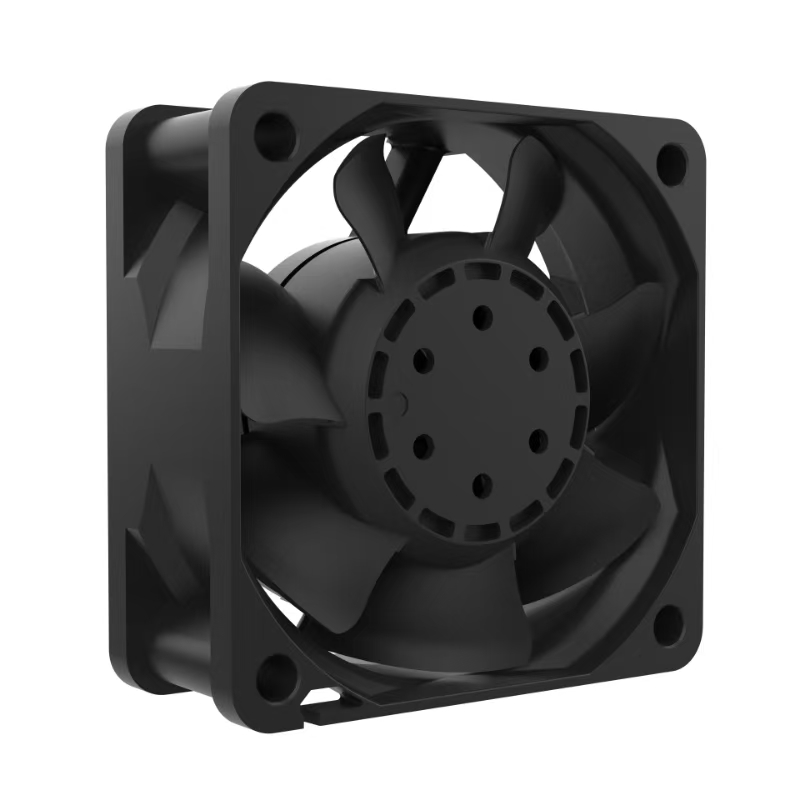
A high pressure DC blower is a special type of DC air supply equipment optimized for high wind pressure and strong air compression performance, which is different from ordinary DC blowers that focus on conventional air volume circulation. This product takes high-pressure air delivery as the core design goal, adopts a multi-stage pressurization structure and high-torque brushless DC motor, and can generate strong static pressure to meet the air supply and ventilation requirements of high-resistance, narrow-channel, and long-distance air delivery scenarios. It is a key ventilation device in industrial high-pressure air supply, equipment dust removal, pipeline ventilation, and positive pressure heat dissipation fields. The core working principle of the high pressure DC blower is to use the high-speed rotation of the precision impeller to squeeze and compress air in the closed air duct, convert the kinetic energy of the air into static pressure energy, and form high-pressure and high-speed airflow to break through the resistance of complex air ducts, filter screens, and narrow spaces, realizing efficient air delivery and heat exchange.
In terms of structural optimization, the high pressure DC blower has carried out targeted upgrades on the basis of ordinary brushless DC blowers. First of all, the motor is equipped with a high-torque customized brushless DC stator and rotor, which can maintain high-speed and stable operation under load conditions, providing sufficient power support for high-pressure air compression. Secondly, the impeller adopts a dense multi-blade forward-curved design, with more blades and a smaller blade spacing, which can gather more air volume in a single rotation and effectively improve air compression efficiency. The volute air duct is designed with a narrow and streamlined pressurization structure, which reduces air overflow and pressure loss in the air delivery process, and concentrates the airflow to form high-pressure concentrated wind. In addition, the whole machine adopts a high-strength sealed structure, which avoids air leakage caused by high-pressure airflow impact, ensures stable output of wind pressure, and improves the overall working efficiency of the equipment.
The core performance advantage of high pressure DC blowers lies in their excellent wind pressure resistance and high-load operation capability. Ordinary DC blowers are prone to sharp drop in air volume and wind pressure when encountering pipeline resistance, filter screen blockage, and narrow space barriers, while high pressure DC blowers can maintain stable wind pressure output under high-resistance working conditions. The static pressure of mainstream products can reach 500Pa to 3000Pa, which is 3-10 times that of ordinary DC blowers, and can easily cope with various high-resistance ventilation scenarios. At the same time, the product retains the advantages of brushless DC drive technology, with low energy consumption, long service life, and low electromagnetic interference. It supports DC low-voltage safe voltage input such as 12V, 24V, and 48V, avoiding the safety risks of high-voltage AC blowers, and is suitable for indoor and low-voltage industrial equipment scenarios with high safety requirements.
In terms of application fields, high pressure DC blowers have irreplaceable application value in scenarios requiring high-pressure air supply and strong penetration. In the field of equipment heat dissipation, it is widely used for positive pressure heat dissipation of high-power industrial equipment, power modules, and battery packs. For high-power equipment with dense internal components and narrow heat dissipation channels, the high-pressure airflow can penetrate the narrow gap inside the equipment, take away accumulated heat, and solve the heat dissipation dead angle problem that ordinary blowers cannot handle. In the field of environmental purification, high pressure DC blowers are used in industrial dust collectors, air purifiers with high-density filter screens, and fresh air ventilation systems with long pipelines. The high-pressure wind can quickly pass through multi-layer filter screens and long-distance ventilation pipelines to ensure stable air circulation and purification efficiency.
In addition, high pressure DC blowers are also widely used in industrial auxiliary processes, such as material drying, surface air drying, pipeline purging, and small pneumatic power supply. In the production and processing of electronic accessories, hardware parts, and plastic products, the high-pressure and high-speed airflow can quickly dry the surface moisture of products and remove surface dust and debris, improving production efficiency and product yield. In the field of new energy equipment, it is used for positive pressure ventilation and heat dissipation of energy storage battery cabinets and charging piles. The high-pressure air supply can effectively solve the heat accumulation problem of battery clusters in closed cabinets and ensure the safe and stable operation of new energy equipment. With the development of industrial precision production and new energy industry, the demand for high pressure DC blowers with high stability, low energy consumption and high pressure output is increasing day by day, and it has become an essential supporting equipment for high-end industrial ventilation systems.
In terms of product performance iteration, modern high pressure DC blowers are constantly optimizing the pressure-volume ratio, realizing the dual improvement of high wind pressure and appropriate air volume, avoiding the defect of low air volume of traditional high-pressure blowers. At the same time, it is equipped with intelligent speed regulation and constant pressure control technology, which can automatically adjust the motor speed according to the air duct resistance and pressure changes, maintain constant wind pressure output, and ensure the consistency and stability of air supply effect in long-term operation. The modular design also realizes convenient disassembly, cleaning and maintenance, reducing the later use cost of equipment.
If you have any suggestions and comments on our products and services, please fill in the following table

No. 18, Liguang New Industrial Zone Liguang Community, Guanlan Sub-district Longhua District, Shenzhen
Copyright 2026 © Shenzhen Yuchuang Industry Co., Ltd. 粤ICP备16089648号




 Chinese
 CN
CN Home >