


 Jun 24, 2026
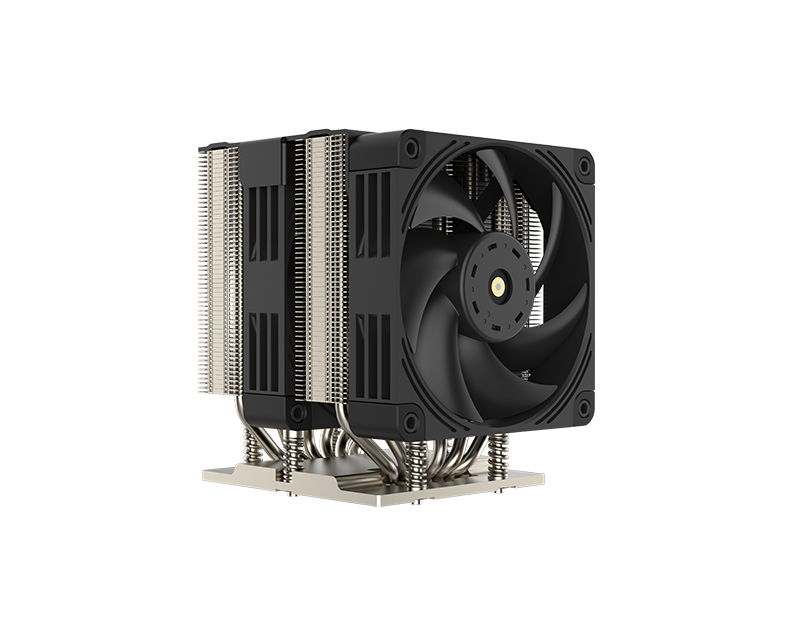
A chassis DC blower fan is a professional heat dissipation and ventilation blower specially designed for electronic equipment chassis, cabinet bodies and closed shell equipment. It adopts DC low-voltage drive and compact integrated structural design, focusing on solving the problems of heat accumulation, poor air circulation and high temperature failure of internal components of various equipment chassis. As the most widely used supporting heat dissipation component in the electronic equipment industry, the chassis DC blower fan has the characteristics of small size, easy installation, low noise, stable operation and strong compatibility, and is suitable for all kinds of computer chassis, industrial control cabinets, power distribution cabinets, instrument chassis and communication equipment chassis ventilation and heat dissipation scenarios.
The structural design of the chassis DC blower fan is highly targeted and practical, fully adapting to the installation space and working environment of equipment chassis. The whole machine adopts a square or rectangular ultra-thin frame structure, with standardized installation hole positions, which can be perfectly matched with the reserved installation positions of mainstream chassis and cabinet equipment on the market, realizing quick assembly and disassembly. The internal structure is composed of a high-efficiency DC brushless motor, high-precision silent bearing, aerodynamic optimized impeller and anti-vibration rubber mat. The silent bearing effectively reduces the friction noise during the operation of the fan, and the anti-vibration rubber mat at the bottom of the frame can absorb the vibration generated by the operation of the blower, avoid the resonance noise between the fan and the chassis, and greatly reduce the overall operating noise of the equipment. The impeller is made of high-toughness engineering plastic, which is not easy to deform and age, and can maintain stable air supply efficiency after long-term high-speed operation.
In terms of working performance, the chassis DC blower fan is mainly oriented to the closed and semi-closed heat dissipation environment of the chassis, focusing on balancing air volume, wind pressure and noise. Different from industrial high-pressure blowers, it adopts a medium air volume and low noise design, which can form a stable internal and external air convection inside the closed chassis, discharge the heat generated by CPU, power supply, circuit board and other components in time, and avoid equipment performance degradation, crash and component burnout caused by high temperature accumulation. The product supports conventional DC 12V and 24V voltage input, which is perfectly compatible with the low-voltage power supply system of electronic equipment chassis, with low power consumption and no additional power transformation equipment required. Most chassis DC blowers support PWM stepless speed regulation and automatic temperature control speed regulation. When the internal temperature of the chassis is low, the fan runs at a low speed to reduce noise and energy consumption; when the temperature rises, the speed increases automatically to enhance heat dissipation efficiency, realizing intelligent energy-saving heat dissipation.
The core advantages of chassis DC blower fans are reflected in high stability and strong adaptability. In terms of safety performance, the product has built-in multiple protection functions such as over-current, over-voltage, over-temperature and stall protection. When the chassis is dusty and the impeller is stuck or the circuit is abnormal, the fan will automatically protect itself to avoid burning the motor and damaging the equipment. In terms of environmental adaptability, it can work stably in the temperature range of -10℃ to 60℃, adapting to the long-term continuous operation requirements of indoor office equipment and industrial control equipment. The dust-proof design of the fan frame can effectively block external dust from entering the motor interior, reduce component wear, and extend the service life of the fan, with a normal service life of more than 40,000 hours.
The application scenarios of chassis DC blower fans cover civil, commercial and industrial electronic equipment fields. In the civil field, it is the core heat dissipation component of desktop computer chassis, game console chassis, and household intelligent equipment chassis, ensuring the stable operation of daily electronic equipment. In the commercial field, it is widely used in server chassis, industrial computer chassis, communication switch chassis, and monitoring equipment chassis, providing 24-hour uninterrupted heat dissipation and ventilation for office and communication equipment. In the industrial field, it is applied in industrial control cabinet chassis, power distribution box chassis, inverter equipment chassis and automation instrument chassis, solving the heat dissipation problem of industrial electronic equipment operating in harsh environments for a long time. In addition, it is also used in small medical equipment chassis and experimental instrument chassis, meeting the high-precision and low-noise working requirements of medical and experimental equipment.
With the continuous upgrading of electronic equipment towards high performance and integration, the power density of internal components of the chassis is increasing, and the heat generation is also rising. The chassis DC blower fan is also constantly upgraded in technology, developing towards miniaturization, ultra-silence, high air volume and intelligence. The new generation of chassis DC blowers adopts more optimized fluid mechanics design, further improving heat dissipation efficiency while reducing noise, and supports intelligent linkage with equipment temperature sensors, realizing more accurate and energy-saving heat dissipation control. It has become an indispensable basic accessory to ensure the stable operation of all kinds of chassis electronic equipment.
If you have any suggestions and comments on our products and services, please fill in the following table

No. 18, Liguang New Industrial Zone Liguang Community, Guanlan Sub-district Longhua District, Shenzhen
Copyright 2026 © Shenzhen Yuchuang Industry Co., Ltd. 粤ICP备16089648号




 Chinese
 CN
CN Home >